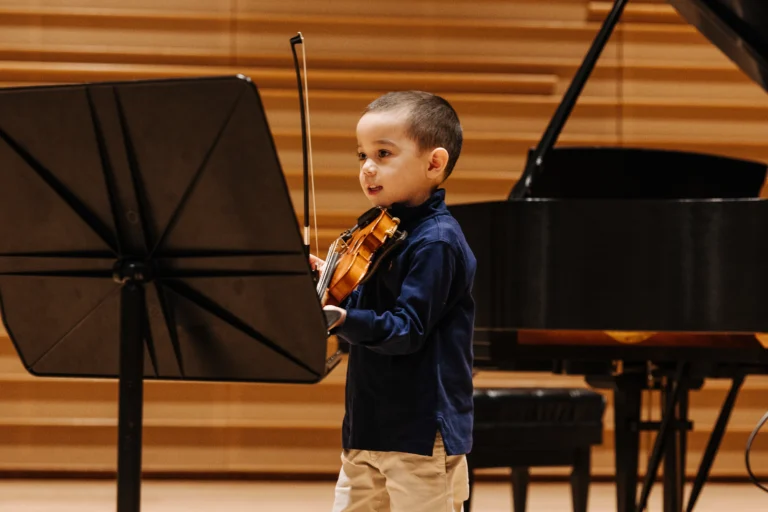
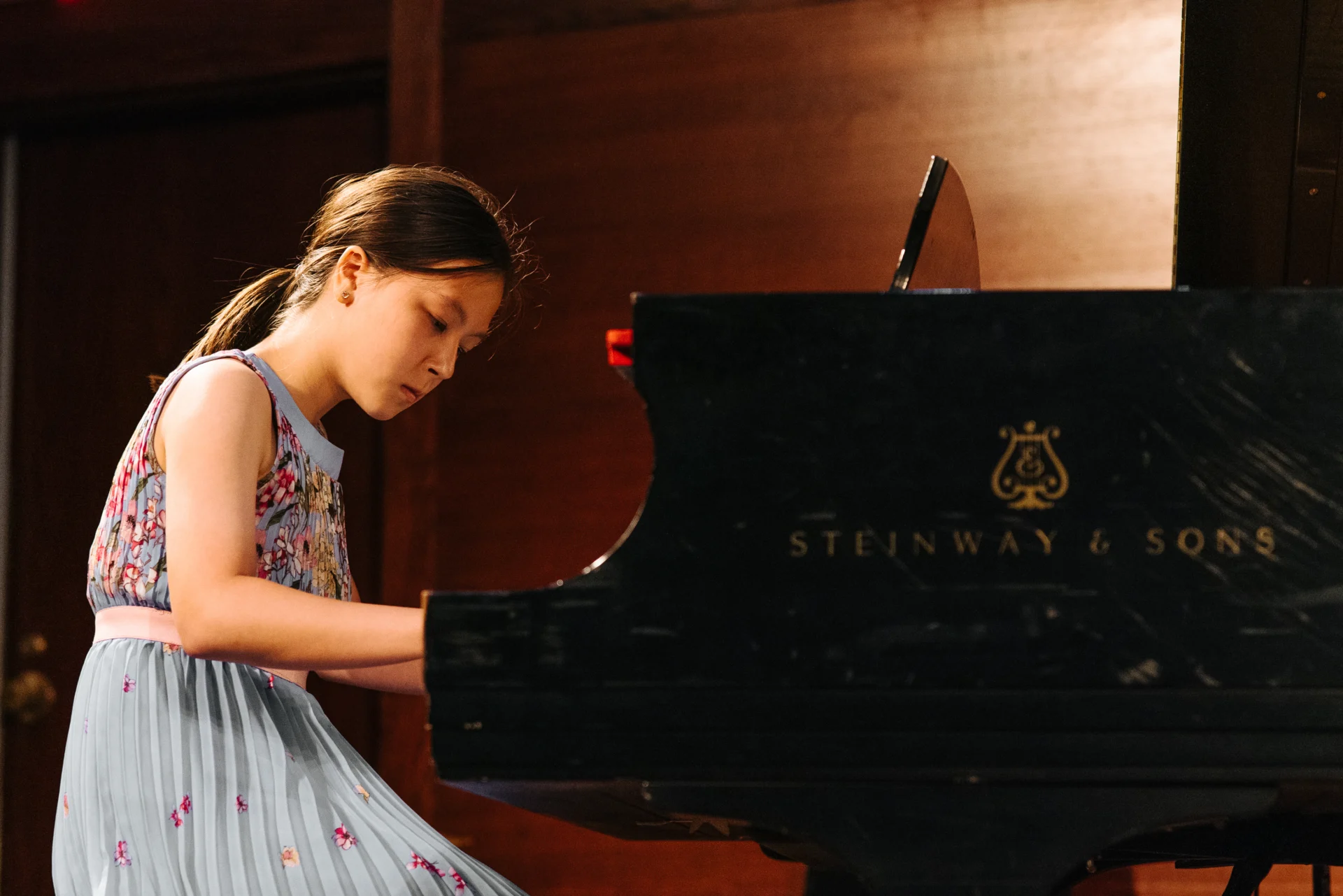
You pictured it before your child was born. Maybe a baby grand by the window overlooking the park. A small person at the bench, feet not quite touching the pedals, learning to play something that makes the whole apartment feel a little warmer. The piano is the easy part. Choosing the right piano teacher in NYC is what most parents tell us keeps them up at night.
That decision matters more than the instrument itself. A great teacher turns Tuesday afternoons into a child’s favorite hour of the week. The wrong one can quietly convince a curious kid that music isn’t for them. After 25 years of matching NYC families with teaching artists, we’ve learned the difference rarely comes down to who has the fanciest resume. It comes down to fit.
Here is how we think about the search, and what we encourage every parent to look for before their child sits down for that first lesson.
Why the Right Piano Teacher Matters More Than the Instrument
New parents often ask us whether to buy an upright or invest in a grand. We always bring the conversation back to the teacher. A $40,000 instrument in the hands of a teacher who doesn’t understand your child will not produce a musician. A modest upright with the right mentor can produce a lifelong love of music.
Piano lessons, at their best, are not about scales. They are about a relationship. The best piano teachers in NYC are part coach, part storyteller, part psychologist, and part artist. They build confidence brick by brick. They know when to push and when to let a seven-year-old take a week off because multiplication tables are stealing all the brain space. That kind of teacher is worth finding. And finding them well takes some work.
What to Look For in a Piano Teacher for Your Child
When we vet teaching artists for the Soyulla roster, we look at four things above all else. Parents can borrow the same checklist.
Conservatory-Level Training
Formal training matters. Not because a piece of paper makes someone inspiring, but because rigorous conservatory education teaches a pianist how to teach. It gives them a deep understanding of technique, repertoire, pedagogy, and musicianship that a self-taught teacher, however charming, usually lacks.
Look for credentials from institutions like Juilliard, Manhattan School of Music, Curtis, the New England Conservatory, NYU Steinhardt, or the New School. A conservatory-trained teacher can diagnose a technical issue in the first lesson and build a multi-year plan for your child, not just a fun first semester.
A Real Performance Life
A piano teacher who performs is a piano teacher who is still learning. When we say our teaching artists perform at Carnegie Hall, on Broadway, at Lincoln Center, and in jazz rooms around the city, we mean it literally. That active artistic life matters for your child. It means the person sitting next to them on the bench is not recycling the same lesson from 1998. It means they are constantly sharpening the craft they are passing on.
Ask any prospective teacher where they perform, when, and with whom. A thoughtful answer is a very good sign.
A Track Record With Your Child’s Age
Teaching a four-year-old is a completely different craft than teaching a twelve-year-old. The best beginner teachers for very young children know how to use games, stories, color-coded notation, and plenty of movement. The best teachers for tweens and teens know how to introduce real repertoire, chamber music, and improvisation without losing them to the pull of social media and soccer practice.
Ask for specific examples of students at your child’s age and what they were working on at three months, six months, and one year in. A teacher who can answer in vivid detail has done this before. A teacher who speaks only in generalities may be guessing.
Warmth That Reads the Room
Qualifications get a teacher in the door. Warmth keeps them there. We have placed Juilliard graduates who turned out to be better suited to adult students than to children, and we have placed teachers with less famous pedigrees who can make a shy five-year-old bloom. Personality, patience, and the ability to notice when a kid needs a laugh before a scale is the part of the job that cannot be faked.
When you meet a potential teacher, watch your child’s shoulders. If they soften in the first ten minutes, that teacher is doing something right.
The Matching Question: Why Chemistry Is the Secret Ingredient
We have matched thousands of students and teachers over 25 years, and the single most reliable predictor of long-term success is chemistry. Not credentials. Not neighborhood. Not price. Chemistry. It is the reason we built a boutique matching process instead of a directory, and it is the reason most families who come to us stay for years.
Our 99% teacher-student match rate is not magic. It comes from spending real time understanding both sides before a single lesson is scheduled. What does your child light up about? Are they a structured learner or an improviser? Do they crave praise or prefer a quieter dynamic? What does a successful Tuesday afternoon look like in your household?
Parents can do this work themselves. Trust your instincts after the first meeting. If a teacher feels wrong, even if their credentials are stellar, they probably are. The right piano teacher for your child exists in NYC. Keep looking until you find them.
In-Home vs. Studio Piano Lessons in NYC
This is one of the most common questions we hear from UES, UWS, Tribeca, and Park Slope families. The honest answer is that both can work. Which one is right for your family depends on your child, your apartment, and your schedule.
In-home piano lessons in NYC offer something studios cannot: lessons happen on the instrument your child actually practices on, in the space where they already feel safe. For younger children especially, that familiarity shortens the ramp to real progress. It also gives back what NYC parents value most, which is time. No subway, no weather delays, no waiting rooms on a rainy Wednesday.
Studio lessons can be the right call for families without a piano at home yet, or for older students who benefit from a more formal environment. The common thread, either way, is the teacher. A world-class teacher is world-class whether they are in your living room or on 86th Street.
If you’d like a longer look at the trade-offs, we wrote a companion piece on in-home versus studio music lessons in NYC that walks through the decision in more detail.
What About Cost? An Honest Conversation
Private piano lessons in NYC cover a wide range, and parents deserve transparency. Group classes at community music schools can start at around $40 to $60 per session. Private instruction with a conservatory-trained teacher in Manhattan typically runs from $100 to $250 per hour, depending on the teacher’s credentials, performance history, and whether the lesson comes to you.
Our recommendation is to think about cost the way you think about any other investment in your child’s development. The cheapest teacher is rarely the best value. The most expensive one is not automatically the right match. Look for the teacher whose training, temperament, and teaching style line up with your child, then worry about the price.
For families used to curating tutors, coaches, and schools at the same level of care, the right piano teacher belongs in that same boutique conversation.
Questions to Ask Before Your Child’s First Piano Lesson
A short list we give to every parent considering a new teacher:
- Where did you train, and who were your primary teachers?
- Where do you perform now, and with whom?
- What does a first lesson with a beginner look like in your studio?
- How do you keep a young child engaged over a year or two?
- How do you handle a week when practice didn’t happen?
- How do you structure goals for students preparing for school auditions, recitals, or just lifelong enjoyment?
The answers should feel warm, specific, and grounded in real experience. Vague answers are information too.
Why Families Come to Soyulla for Piano Teacher Matching
If the checklist above feels like a lot, that is because it is. Finding the right piano teacher in NYC is genuinely hard. It is the reason Soyulla exists. We built our company around this exact problem.
For 25 years, we have served as the quiet guide behind the scenes for NYC families who want the right match, not the nearest one. Our roster of more than 69 conservatory-trained teaching artists includes many with credentials from Juilliard, Curtis, Manhattan School of Music, Berklee, and the New England Conservatory. Many of them perform on the stages that define NYC’s cultural life: Carnegie Hall, Broadway, Lincoln Center, Opera America, Steinway Hall.
That roster is not the point, though. The point is what we do with it. Our matching process starts with a real conversation about your child, their temperament, their schedule, their goals, and your family’s rhythm. Only then do we introduce a teacher. Because we serve families in-home across Manhattan, Brooklyn, the Bronx, Queens, and parts of New Jersey, we can be thoughtful about logistics too. The goal is a match that can last five, ten, or even fifteen years of growth, not a lesson that ends at the first scheduling conflict.
Our 99% match success rate is the result of that patience. When it works, it is the start of a mentorship that shapes a child for life. Your child is the hero of that story. We are here to help you find the right mentor to walk alongside them.
Frequently Asked Questions
What age should a child start piano lessons?
Most children are ready for formal piano lessons between ages 5 and 7, when fine motor skills, reading readiness, and attention span align. Some curious four-year-olds do beautifully with the right teacher and a play-based approach, while some children benefit from waiting until age 6 or 7. The most important factor is not the age on the calendar but the child’s own interest and the teacher’s skill with young beginners.
Should I choose in-home or studio piano lessons for my child?
In-home piano lessons are often the right choice for NYC families because your child learns on their own instrument, in a familiar environment, without the time cost of travel across the city. Studio lessons can work well for older students who enjoy a more formal setting or for families without a piano at home yet. The teacher’s quality matters more than the location.
How do I know if a piano teacher is qualified?
Look for conservatory training from a recognized institution such as Juilliard, Curtis, Manhattan School of Music, Berklee, or the New England Conservatory. A qualified piano teacher also maintains an active performing life, has specific experience teaching students your child’s age, and can describe their teaching philosophy and a student’s likely progress over the first year.
How long should a child’s piano lesson be?
Most children aged 4 to 6 thrive with 30 minute lessons, where shorter attention spans can stay fully engaged. Children aged 7 and up usually do well with 45 minute lessons, and serious students aged 10 and up often move to 60 minute sessions. The right length depends on the child, the teacher’s approach, and the child’s goals, not a one-size-fits-all rule.
Ready to Find the Right Match?
If you are beginning the search for a piano teacher for your child in NYC, we’d love to help. Our matching process is designed to pair your child with a mentor whose training, warmth, and teaching style genuinely fit your family. Reach out and we will start a conversation.